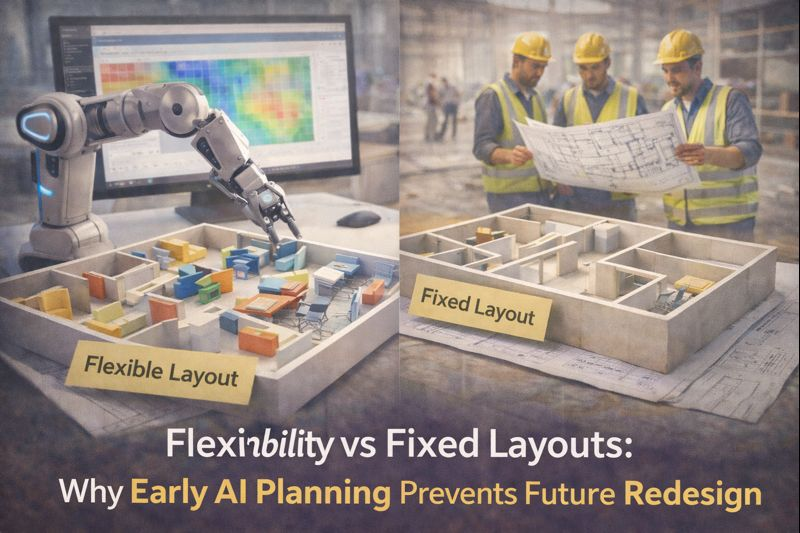
Introduction: The Floor Plan Is the Most Dangerous Drawing in a Project
No drawing feels more “final” than a floor plan.
Clients look at it and think they understand the project.
Designers look at it and assume flexibility still exists.
Consultants look at it and begin locking systems around it.
This contradiction is why floor plans cause more downstream pain than almost any other design artifact.
Floor plans are approved before their consequences are understood—and adjusted after everything else depends on them.
AI floor planning tools are emerging not to automate layouts, but to surface spatial consequences earlier, when change is still affordable and intentional.
Short Briefing: Who This Pillar Is For
This article is written for:
- architects in early planning stages
- interior designers defining layouts
- developers reviewing feasibility
- space planners and design managers
- AEC teams coordinating downstream disciplines
If your projects suffer from late layout changes, circulation conflicts, or “this worked on plan but not in reality” moments—this pillar is for you.
The Illusion of Understanding: Why Floor Plans Feel Clear When They’re Not
Floor plans are deceptively simple.
They are flat, quiet, and familiar. Clients recognize rooms, corridors, and labels. They believe they understand space—even though depth, light, movement, and interaction are missing.
A plan shows where things are.
It doesn’t show how they work together.
Because plans feel legible, they get approved quickly. That approval creates a false sense of certainty that follows the project downstream.
Why Layout Problems Appear During Coordination, Not Planning
Most layout problems don’t originate during coordination—they are revealed there.
Issues like:
- tight circulation
- awkward adjacencies
- inefficient cores
- poor daylight penetration
- furniture conflicts
- accessibility pressure
These were always present in the plan. They just weren’t visible yet.
By the time MEP, structure, fire, and furniture systems are layered on top, the plan hardens—and fixes become compromises.
Floor Plans Lock Decisions Earlier Than Designers Realize
A single early layout decision can quietly determine:
- column spacing
- service routes
- ceiling zones
- furniture density
- code compliance paths
Designers often intend early plans to be provisional. But once shared, those plans become anchors.
AI floor planning helps designers test and stress layouts early, before they become anchors others build around.
Why Traditional Space Planning Tools Fall Short
Traditional tools excel at drawing plans—but not at questioning them.
They allow designers to:
- draw walls
- place rooms
- label areas
What they don’t do well is:
- highlight spatial inefficiencies
- expose circulation pressure
- compare layout options quickly
- simulate use patterns
As a result, designers rely heavily on experience and intuition—which is valuable, but not infallible under time pressure.
AI Floor Planning Is About Feedback, Not Automation
AI floor planning does not “design for you.”
Instead, it:
- evaluates spatial logic
- tests adjacencies
- flags inefficiencies
- compares layout alternatives
- reveals consequences earlier
Designers remain in control.
The AI acts as a second set of eyes—fast, consistent, and tireless.
This is especially valuable in projects with tight constraints, dense programs, or aggressive timelines.
Why Developers Care More About Floor Plans Than Renders
Developers may react emotionally to visuals, but they decide rationally on layouts.
A floor plan determines:
- sellable area
- efficiency ratios
- leasing flexibility
- operational performance
- future adaptability
AI-assisted floor planning gives developers clearer insight earlier—reducing late feasibility shocks and redesign loops.
From Space Logic to AEC Reality
Floor planning sits at the center of the AEC pipeline.
Once a layout is validated, everything else aligns around it:
- interiors
- structure
- MEP
- schedules
- costs
This is why early layout clarity is so powerful—and why platforms like Ruwaq Design naturally extend AI floor planning into coordination, validation, and delivery workflows, ensuring early spatial logic survives real-world complexity.
How AI Floor Planning Reveals Spatial Problems Before They Become Expensive
Floor Planning Is About Relationships, Not Rooms
Most floor plans look reasonable when viewed in isolation.
Rooms are sized correctly.
Corridors connect spaces.
Everything fits inside the building envelope.
But the success of a layout is not defined by room sizes alone. It’s defined by relationships—how spaces interact, how people move, and how systems layer on top of one another.
This is where many layouts quietly fail.
AI floor planning tools focus on these relationships, surfacing issues that are easy to miss when drawing manually under time pressure.
Adjacency Logic: Where Most Layout Problems Begin
Adjacency decisions seem simple:
- offices near cores
- services near wet areas
- public spaces separated from private ones
Yet small misalignments compound quickly.
A service room placed slightly off ideal position can:
- lengthen circulation routes
- force inefficient service runs
- reduce usable area
- create awkward transitions
AI-assisted planning evaluates adjacency patterns across the entire plan, highlighting where relationships are inefficient or contradictory—long before consultants flag them.
Designers don’t lose control. They gain early warning.
Circulation Is Felt, Not Measured
Circulation problems rarely show up as red flags on drawings. They show up as discomfort.
People hesitate at corners.
Routes feel longer than they look.
Spaces feel crowded despite meeting code.
AI floor planning tools simulate movement patterns and circulation pressure, helping designers sense whether a plan works, not just whether it fits.
This is especially valuable in:
- workplaces
- residential corridors
- hospitality layouts
- healthcare and education facilities
Early feedback here prevents late layout surgery.
Efficiency Metrics Without Killing Design Intent
Efficiency ratios matter—especially to developers—but raw numbers can be misleading.
A highly efficient plan on know-how metrics might feel rigid or stressful in use. A slightly less efficient plan might perform better in reality.
AI floor planning allows designers to compare options visually and analytically—without forcing them into a single definition of “optimal.”
Design intent remains central.
Metrics become support, not authority.
Comparing Layout Options Without Starting Over
One of the biggest barriers to exploration is redraw cost.
Manually testing three layouts often means drawing three plans. Under tight schedules, designers pick one direction early and hope it works.
AI-assisted floor planning reduces that cost by:
- generating variations from a base logic
- adjusting constraints dynamically
- allowing side-by-side comparison
Designers explore more because it’s cheaper to do so. Exploration increases confidence, not confusion.
Why Early Layout Comparison Improves Client Decisions
Clients struggle to evaluate a single plan in isolation.
When they see only one option, feedback stays vague. When they see two or three clear alternatives, preferences emerge quickly.
AI floor planning supports this by presenting:
- distinct layout strategies
- visible trade-offs
- clear consequences
Clients stop reacting emotionally and start deciding intentionally.
This reduces late reversals and protects project momentum.
Designers Stay in Control—AI Just Surfaces Consequences
A common fear is that AI will push “optimal” layouts that ignore context or creativity.
In practice, good AI floor planning systems don’t decide—they respond.
Designers define:
- program requirements
- priorities
- constraints
- spatial intent
AI then reveals:
- what those decisions imply
- where pressure accumulates
- which alternatives ease it
Authorship stays human.
Feedback becomes sharper.
Why This Matters for AEC Coordination
Once a layout hardens, consultants align systems around it.
If the layout is weak, coordination becomes defensive.
If the layout is strong, coordination becomes efficient.
AI floor planning strengthens layouts before they enter coordination—reducing clashes, rerouting, and late redesign.
And when validated layouts move into deeper AEC workflows, platforms like Ruwaq Design help carry that early spatial logic into BIM, coordination, and delivery without losing intent.
How AI Floor Planning Reduces Rework, Change Orders, and Late Layout Compromises
Why Layout Problems Surface During Construction, Not Design
When layout issues appear on site, they’re often framed as “unexpected.”
In reality, they were almost always unseen, not unexpected.
By the time construction begins, the floor plan has already influenced:
- structural grids
- service routes
- fire and egress paths
- ceiling zones
- furniture and equipment layouts
At that stage, changing the plan is no longer design—it’s damage control.
The real problem is timing.
Layout consequences become visible after decisions have hardened.
AI floor planning shifts that visibility earlier, when change still improves the project instead of disrupting it.
The Hidden Cost of Late Layout Changes
Late layout changes are expensive in ways that don’t always show up in budgets immediately.
They trigger:
- cascading redraws across disciplines
- resequencing of coordination
- procurement delays
- approval resets
- loss of team confidence
Even when costs are absorbed, trust takes a hit.
Most of this pain originates from layouts that were approved before their spatial, operational, and coordination consequences were fully understood.
Why Floor Plans Become “Untouchable” Too Soon
Floor plans feel foundational, so teams are reluctant to challenge them once they circulate.
Clients assume approval means finality.
Consultants assume stability.
Contractors assume buildability.
Designers may still see flexibility—but by then, the plan has become an anchor.
AI floor planning helps designers stress-test layouts before they acquire that weight, revealing pressure points early enough to address them intelligently.
Early Layout Clarity Prevents Value Engineering from Diluting Design
Value engineering is often blamed for ruining layouts. In reality, it steps in where clarity is missing.
When a plan lacks:
- efficient circulation
- logical adjacencies
- realistic allowances
- operational awareness
value engineering fills the gaps with cost-driven decisions.
When layout intent is clear early, value engineering becomes targeted and collaborative—focused on cost without dismantling the spatial logic.
How AI Floor Planning Reduces Change Orders
Change orders related to layout usually trace back to one of three causes:
- circulation conflicts
- service coordination pressure
- under-allocated space
AI floor planning addresses these by:
- revealing circulation stress early
- highlighting adjacency inefficiencies
- comparing alternatives before commitment
When these issues are resolved upfront, change orders simply don’t materialize later.
Layout Decisions Shape Schedule More Than Most Teams Realize
Schedules slip not because drawings are late—but because decisions change late.
Every layout revision triggers:
- redesign
- recoordination
- resubmission
- resequencing
Early layout clarity stabilizes schedules by reducing decision churn.
AI floor planning supports this by helping teams commit to layouts with confidence—not hope.
Why Clients Trust Projects with Strong Early Layout Logic
Clients may not read drawings deeply, but they sense instability.
When layouts change repeatedly:
- confidence erodes
- approvals feel risky
- oversight increases
When layouts hold:
- trust builds
- approvals accelerate
- engagement improves
AI-assisted planning improves approval quality, not just speed—because clients understand the trade-offs earlier.
From Layout Validation to AEC Delivery
Once a layout is validated, it becomes the backbone of the project.
Strong layouts:
- reduce coordination friction
- improve consultant efficiency
- stabilize cost planning
- support predictable delivery
This is where AI floor planning naturally connects to broader AEC workflows. Platforms like Ruwaq Design extend early spatial validation into BIM coordination, issue tracking, and delivery—so the logic tested early survives the full project lifecycle.
Why floorplanningai.com Becomes an Authority Domain
The purpose of floorplanningai.com is not to draw plans—it’s to explain why layouts succeed or fail.
By focusing on:
- timing of decisions
- spatial consequences
- coordination pressure
- operational logic
the domain earns trust from architects, designers, developers, and AEC managers.
That trust then flows naturally to deeper platforms like Ruwaq Design when projects move beyond planning into execution—without aggressive selling.
Authority is built by helping teams avoid pain before it happens.
The Bigger Shift: Layouts Become Tested Systems, Not Assumptions
The future of floor planning is not faster drafting.
It’s earlier understanding.
AI doesn’t replace intuition—it strengthens it by making consequences visible when they still matter.
Layouts that succeed are not perfect.
They are validated early, understood widely, and protected through delivery.
Final Conclusion
Floor plans don’t fail because designers lack skill.
They fail because consequences appear too late.
AI floor planning changes that timeline—bringing clarity, comparison, and confidence forward, where they reduce rework instead of causing disruption.
Better layouts don’t eliminate complexity.
They manage it early.